
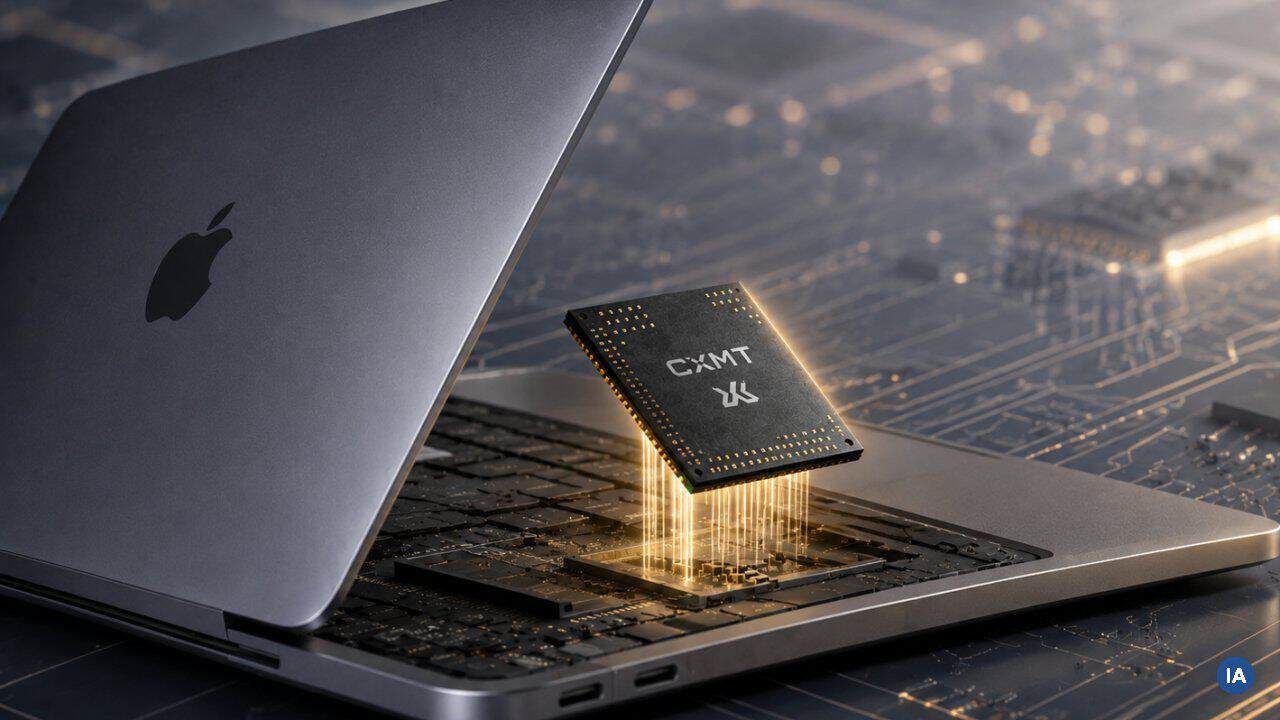
The issue of Apple using Chinese memory chips has sparked a conflict between the need to secure components and US national security restrictions. The company has been seeking a solution to the global memory shortage for months, which has driven up prices across the industry, and has evaluated chips manufactured by CXMT and YMTC.
US Commerce Secretary Howard Lutnick has made it clear that the Trump administration does not want large US companies to rely on Chinese memory suppliers. However, the current regulatory framework may not automatically prevent the purchase of standard components.
The US license is required to share technical information intended for manufacturing custom components. Apple maintains that its memory chips have little customization, so a purchase of off-the-shelf chips might not meet that requirement.
What has the United States said about CXMT and YMTC?
Lutnick stated that the Administration is not in favor of Apple sourcing Chinese memory and asserted that this message had been clearly conveyed to the company. This stance represents direct political opposition, but does not in itself constitute a trade ban applicable to any component.
The situation of the two manufacturers is not identical either. YMTC is listed on the Commerce Department's Entity List , while CXMT is not. The Pentagon has designated both as Chinese military companies, a classification that reflects national security concerns, though it does not in itself block all business operations.
Customizing your memory makes all the difference
The Department of Commerce may require a license when a U.S. company shares product information with a restricted manufacturer. That information is necessary to produce a component specifically designed for the customer.
Sabih Khan, Apple's chief operating officer, explained that the company customizes many elements of the iPhone, but that memory chips have a limited degree of customization. If it's a standard, off-the-shelf chip, there wouldn't be a custom design to provide to the manufacturer, and therefore the same licensing requirement wouldn't apply.
That argument leaves Lutnick's opposition in the political arena until a regulatory change occurs. Including CXMT on the Entity List would indeed alter the landscape and could cut off a supply route that Apple has yet to confirm it has opened.
Pressure from manufacturers and senators
HP and Acer already incorporate CXMT memory in products sold outside the United States. Apple would thus be moving in a direction that other manufacturers have already explored, although its size and strategic importance have increased political pressure.
In July, a bipartisan group of senators called on Tim Cook to completely ditch Chinese suppliers and set August 21 as the deadline for the company to make a formal commitment. Apple had not yet done so. That same month, Micron argued before the White House that allowing such purchases would harm American manufacturing, while the senators focused their criticism on the reliance on a company designated as a military supplier by the government.
In June, Apple approached the Commerce Department to clarify its position before proceeding. It's unclear whether that request sought authorization to purchase RAM for Macs or a guarantee that CXMT wouldn't be added to the restricted entities list.
The evolution of CXMT within the US lists will therefore be one of the decisive factors. As long as the manufacturer remains off the Entity List , the preference expressed by the Administration does not necessarily become a legal veto.
Goodram introduces a DDR5 SODIMM memory for gaming laptopsApple has not yet secured this supply route
Apple is seeking a buffer in the face of a memory shortage affecting both cost and supply, but the material doesn't confirm a purchase agreement with CXMT or YMTC. The company could rely on standard components without activating the licensing mechanism described, although a future designation of CXMT would change the rules and once again leave its suppliers uncertain.
Find more hardware in our Hardware section or subscribe to Guslok – 100% Guides on YouTube for more content.
About the Author
